Card machines for charities, clubs and very low volume sellers
For a charity, a sports club or anyone taking a few hundred pounds a month, the answer is a pay-as-you-go card reader with no monthly fee. SumUp charges 1.69% per tap, Square and Zettle 1.75%, all with no contract and nothing to pay in a month with no takings. A £19 to £29 reader covers it. A contract terminal, with its rental and minimum monthly charge, is the wrong tool at this volume, and we say that as a company that sells them.

Why the pricing model matters more than the device
Every card machine on the market will take a contactless donation. What separates them is what they cost when nobody donates. Contract providers price on a percentage, then add fixed lines: a terminal rental, sometimes a minimum monthly service charge, sometimes an authorisation fee per transaction. Those lines are bearable for a shop taking £10,000 a month and punishing for a scout group taking £200.
Pay-as-you-go readers strip all of that out. You buy the device once, the provider holds the merchant account, and you pay a flat percentage of each payment. Nothing else. The published rates checked in August 2026: SumUp 1.69% per in-person transaction, no monthly fee; Square 1.75% on UK cards, no setup or monthly fees on its free plan; Zettle 1.75%, no contracts or recurring fees. We compare the three on our Square vs SumUp and SumUp vs Zettle pages.
What a month actually costs
| Scenario | Card takings | SumUp (1.69%) | Square (1.75%) | Zettle (1.75%) |
|---|---|---|---|---|
| Village hall coffee morning | £150 | £2.54 | £2.63 | £2.63 |
| Sports club bar, one weekend | £600 | £10.14 | £10.50 | £10.50 |
| Charity shop, quiet month | £1,200 | £20.28 | £21.00 | £21.00 |
| Annual fundraiser | £3,000 | £50.70 | £52.50 | £52.50 |
| Closed month | £0 | £0.00 | £0.00 | £0.00 |
Illustrative scenarios at published in-person rates, all domestic cards, hardware excluded. Rates checked August 2026.
The last row is the one that matters. A contract with a £20 rental and a minimum charge bills that month anyway. A reader bills nothing. For an organisation whose treasurer answers to a committee, that predictability is worth more than a fraction of a percent on the rate.
Hardware: what to buy
The Square Reader is £19 plus VAT, the SumUp Solo Lite £25 plus VAT, and the Zettle reader from £29 plus VAT on its current promotion. Each pairs with a phone or tablet app over Bluetooth, so whoever is on the stall needs the app installed and signed in. If you would rather not rely on a volunteer's phone, SumUp's Solo at £79 plus VAT has its own screen and connection, and SumUp's Terminal at £135 plus VAT adds a printer.
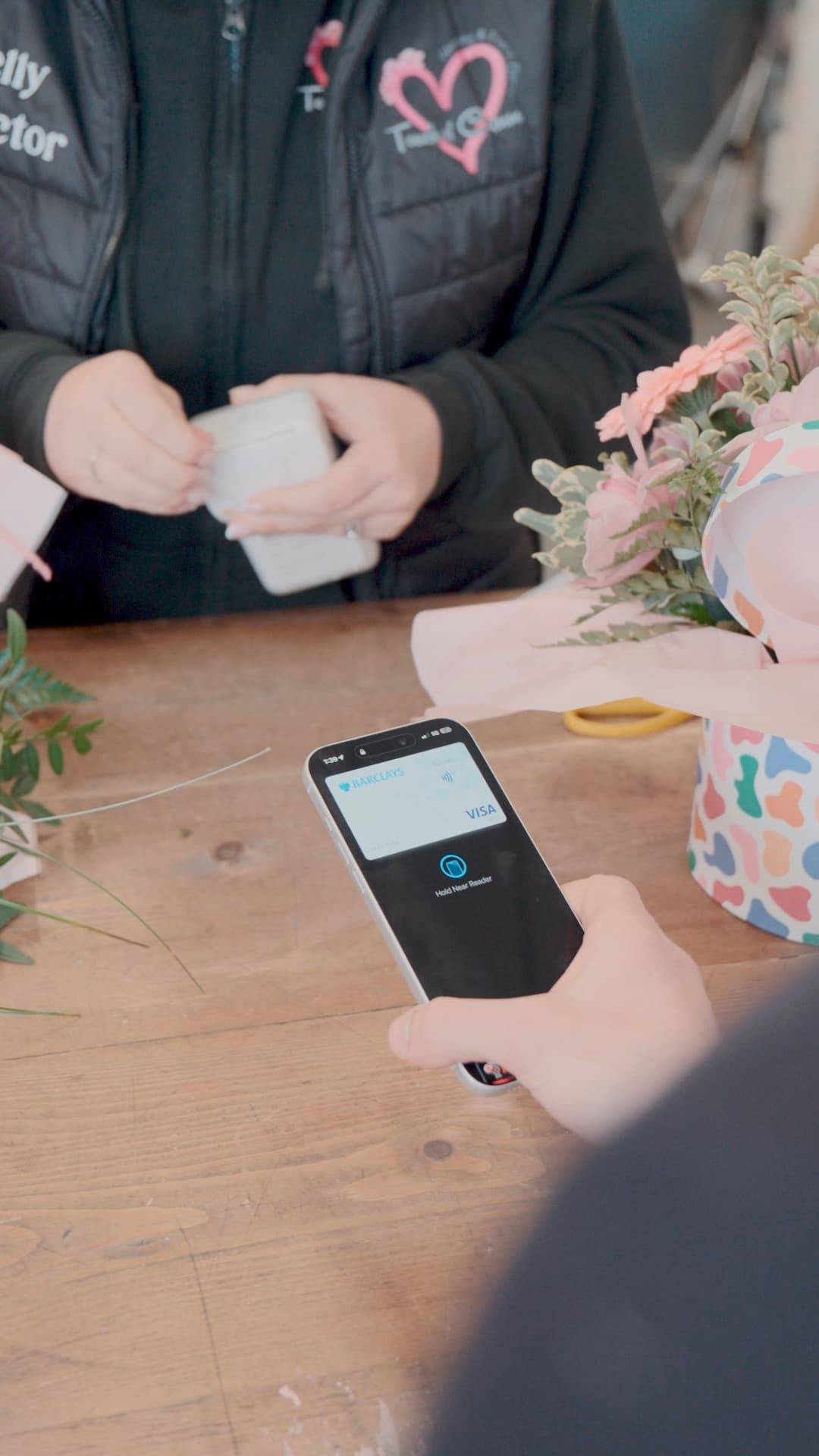
There is also a zero-hardware route. SumUp, Square and Zettle all support Tap to Pay on iPhone in the UK, which turns a recent iPhone into the reader at the same transaction rate and no purchase at all. It is the lowest-cost way to take a one-off collection. Details on our Tap to Pay on iPhone page.
Donation apps and fixed-amount buttons
For charities specifically, the useful feature is a screen with preset amounts (£3, £5, £10) that a donor can tap without the volunteer keying anything. Several providers offer a donation or fundraising mode in their app, and some advertise reduced rates for registered charities. Both vary by provider and change often, so check the provider's site for what is current and get the terms in writing.
Gift Aid
Gift Aid is about the declaration, not the card. Taking a donation on a reader does not itself create a Gift Aid claim; you still need a valid declaration from the donor and records that satisfy HMRC. Some apps can capture a declaration during the payment flow. Whatever you use, check with HMRC on what is required before you build a process around it.
The contactless limit
The FCA raised the single-transaction contactless limit to £100 in 2021. In December 2025 it announced that from March 2026 firms with strong fraud controls may set their own limits, with consumers protected from unauthorised fraud; in practice £100 is still the typical limit most banks apply. Above it the donor inserts the card and enters a PIN, which every reader and terminal supports. For most collections this never comes up. Our contactless limit piece has the detail.
When a contract terminal does make sense
Some charities are not low volume. A charity shop chain, a hospice cafe, a club bar open six nights a week, a visitor attraction with a gift shop: these are businesses with card turnover that would justify a quoted rate, a terminal with a printer and 4G backup, and a proper EPOS integration. At that point the arithmetic on our monthly cost page applies, and Dojo pricing, quoted individually for each business, is worth comparing against the flat rate. For higher card volumes a quote is often the lower option, and the only way to know is to compare a quote against your current statement.
Under a couple of thousand pounds a month, or lumpy and seasonal: pay-as-you-go reader
Steady turnover above that, every month, with a counter: compare a contract quote
Either way, ask what the device costs in a month with no sales before you sign anything
Running a charity shop, club bar or cafe with real volume?
Tell us your monthly card takings. If a flat-rate reader is the better fit we will say so; if not, we introduce you to Dojo for a quote.
Get a Dojo quoteCapExpand is an authorised Dojo partner and is paid by Dojo when a business signs up through us. That does not change the price you pay.
Frequently asked questions
Can a charity or club get a card machine without a monthly fee?
Yes. SumUp (1.69% per transaction), Square (1.75%) and Zettle (1.75%) all publish pay-as-you-go pricing with no monthly fee, no contract and no minimum charge. You buy the reader once and pay only when someone taps. A month with no takings costs nothing.
Do card machine providers offer charity rates?
Some providers advertise reduced rates or dedicated donation tools for registered charities. The offers change, so check the provider's own site and ask for the terms in writing. Do not assume a charity rate applies automatically; it usually has to be requested and evidenced with your charity number.
Can we claim Gift Aid on card donations?
Gift Aid depends on collecting a valid declaration from the donor and on the rules HMRC sets, not on the payment method. Some donation apps can capture declarations alongside a card payment. Check with HMRC, or your charity's accountant, on what records you need to keep.
What is the contactless limit for donations?
The FCA set the single-transaction contactless limit at £100 in 2021. From March 2026 the FCA has allowed firms with strong fraud controls to set their own limits, but £100 remains the typical limit most banks apply. Above it, the donor inserts the card and enters a PIN, which all readers and terminals support.
Does a club need a business bank account for a card reader?
Providers pay out to a nominated account and verify the identity of the person signing up. Whether a club or society account is accepted varies by provider; SumUp, Square and Zettle each set their own requirements. Check the provider's sign-up guidance before buying a reader.
Rates and charity offers change. Figures were checked in August 2026 against the sources below. Nothing here is tax advice; check Gift Aid rules with HMRC.
Sources (checked August 2026)
- SumUp: 1.69% PAYG, no monthly fee, Tap to Pay
- SumUp card readers: Solo Lite £25, Solo £79, Terminal £135 (ex VAT)
- Square UK pricing: 1.75%, no monthly fees, Reader £19 + VAT
- Zettle UK pricing: 1.75%, reader from £29 ex VAT, no recurring fees
- FCA: contactless limit raised to £100 (2021)
- FCA: firms may set their own contactless limits from March 2026
CapExpand Ltd (Company No. 14433858) is an authorised Dojo partner, not a card machine manufacturer. We are not currently authorised or regulated by the Financial Conduct Authority. Card machine pricing and availability are subject to change. All information on this page is for general guidance only.