Chip and PIN machine vs card reader: what's the difference?
Both take the same cards the same way. The difference is the box. A card reader is a small device that pairs with your phone and borrows its screen, signal and receipts. A chip and PIN machine, also called a terminal, PDQ or card machine, stands on its own with a screen, a SIM or WiFi connection, and usually a receipt printer. Readers suit occasional and mobile sellers; terminals suit counters, bars and anyone who needs the thing to work when the phone does not.

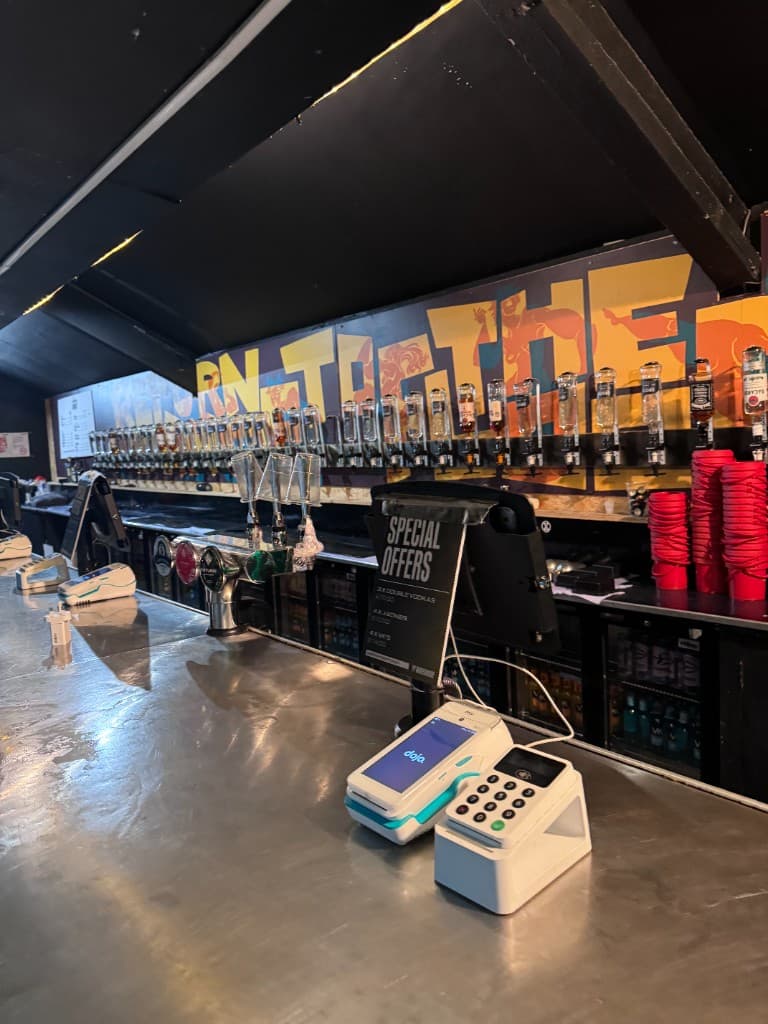
Sorting out the words
The card payments trade has accumulated names for the same object. “PDQ” stands for Process Data Quickly and was the name attached to the first UK card machines in 1979, which read the magnetic stripe; it is still used by people who have been in retail a while, and they will tell you it means pretty damn quick. “Chip and PIN machine” came in with chip cards. “Terminal” is the industry term. “Card machine” is what most people search for. They all mean a standalone device.
“Card reader” is the newer category: a pocket-sized unit from the likes of SumUp, Square and Zettle that connects to an app on your phone or tablet over Bluetooth. The app does the thinking; the reader reads the card. Some readers now have their own screen and connection (SumUp's Solo is one), which blurs the line, but the price and the pricing model usually tell you which camp a device belongs to.
The form factors side by side
| Device | Type | Connectivity | Printer | Price |
|---|---|---|---|---|
| Square Reader | Reader | Bluetooth to phone/tablet | No (app receipts) | £19 + VAT |
| SumUp Solo Lite | Reader | Bluetooth to phone | No | £25 + VAT |
| Zettle Reader | Reader | Bluetooth to phone/tablet | No | From £29 + VAT |
| SumUp Solo | Reader with screen | Standalone | No | £79 + VAT |
| Dojo Pocket | Terminal | WiFi + 4G SIM | No (digital receipts) | £239 or £20/mo (review sites) |
| SumUp Terminal | Terminal | Standalone | Yes | £135 + VAT |
| Square Terminal | Terminal | WiFi or Ethernet | Yes | £149 + VAT |
| Dojo Go / Go Max | Terminal | WiFi + 4G SIM | Yes | Go Max £149 or £25/mo (review sites) |
| Dojo Wired | Countertop terminal | WiFi + Ethernet, mains | Yes | £179 or £15/mo (review sites) |
| Tap to Pay on iPhone | No hardware | Phone data | No | £0 |
SumUp, Square and Zettle from their UK pages. Dojo hardware and prices from review sites (four agree on prices); Dojo's own site could not be verified. All checked August 2026.
Connectivity
A reader has no connection of its own. It talks to your phone, and your phone talks to the provider. If the phone drops to no signal in a basement or a field, so does the reader. A terminal carries its own: the Dojo Go and Pocket have WiFi plus a 4G SIM, the Dojo Wired has WiFi plus Ethernet and runs off the mains, the Square Terminal uses WiFi or Ethernet and can take payments offline for up to 24 hours. For a bar with a cellar, a market pitch or a van, that independence is the reason to pay for a terminal. We cover the no-signal case separately in do card machines work without WiFi.
Printer
Readers do not print. Receipts go by email or text from the app, which most customers are happy with. Terminals split: the Dojo Go, Go Max and Wired, the SumUp Terminal and the Square Terminal all have a built-in printer; the Dojo Pocket does not, which is how it stays small. A printer matters for trades where customers expect paper (trade counters, pubs with tabs to settle, taxis where the licensing authority requires a printed receipt on request). Otherwise it is weight and paper rolls you may not need.
Battery and screen
Review sites put the Dojo Go at around 10 hours of battery with a 5-inch touchscreen, the Go Max at around 10 hours or 650 transactions with a 5.5-inch screen, and the Pocket at around 12 hours or 780 transactions with a 4-inch screen. Readers rely on the phone's battery as much as their own. A long shift behind a bar without a charging break is a terminal job.
Who needs which
Reader: tradespeople, mobile hairdressers, stallholders, clubs and anyone taking a handful of payments a day who already has a phone in their pocket
Printerless terminal (Dojo Pocket): table service, mobile traders and deliveries where you want a standalone device without the bulk
Handheld terminal with printer (Dojo Go, Square Terminal, SumUp Terminal): bars, cafes, salons and shops with a counter and a steady flow of customers
Countertop terminal (Dojo Wired): fixed tills, kiosks and anywhere the device never moves and mains power is at hand
Tap to Pay on iPhone: the zero-hardware option for very low volume or as a backup to any of the above
We have written up the choice for specific trades on our tradespeople, pubs and bars and salons and barbers pages, and the Dojo range is on our Dojo Go, Dojo Pocket and Dojo Wired pages.
When a terminal is the wrong choice
If you take a few payments a week, a terminal is more device than you need and, on a contract, more commitment than you need. A £19 or £25 reader on a flat rate with no monthly fee does the job and costs nothing in a month you do not use it. The same applies if your phone is always with you and always has signal, and your customers never ask for paper.
Conversely, a reader is the wrong choice for a busy counter. Pairing drops, phones get borrowed, batteries die at the worst moment, and every hand-off to a colleague means handing over the phone too. When the device is part of the till, it needs to be its own thing.
Not sure which Dojo terminal fits?
Tell us how and where you take payments. We will say which device makes sense and introduce you to Dojo for a quote.
Get a Dojo quoteCapExpand is an authorised Dojo partner and is paid by Dojo when a business signs up through us. That does not change the price you pay.
Frequently asked questions
Is a card reader the same as a chip and PIN machine?
Functionally both accept chip and PIN and contactless. The difference is the form factor. A card reader is a small device that pairs with your phone or tablet over Bluetooth and relies on the phone for its screen, connectivity and receipts. A chip and PIN machine, or terminal, is a standalone unit with its own screen, SIM or WiFi, and usually a receipt printer.
What does PDQ mean?
PDQ stands for Process Data Quickly. It was the name given to the first card machines in the UK in the late 1970s, which read magnetic-stripe cards, and it stuck as a generic term. People also say it means "pretty damn quick". Today PDQ, card terminal, card machine and chip and PIN machine all refer to the same thing.
Do I need a card machine with a printer?
Only if your customers routinely want paper receipts or your trade requires them. Readers and printerless terminals send receipts by email or text. Terminals with built-in printers include the SumUp Terminal (£135 plus VAT), the Square Terminal (£149 plus VAT) and the Dojo Go and Go Max. Licensed taxi work in London is one case where printed receipts must be available on request.
Can a card reader work without my phone?
No. A reader is an accessory to the phone or tablet app. If the phone is out of battery, out of signal or at home, the reader cannot take payments. A standalone terminal with its own 4G SIM, such as the Dojo Go or Pocket, works independently.
Which is cheaper, a reader or a terminal?
Readers are cheaper to buy: Square Reader £19 plus VAT, SumUp Solo Lite £25 plus VAT, Zettle reader from £29 plus VAT. Terminals cost more or are rented on a contract. Running costs depend on the pricing model rather than the device; readers usually come with a flat pay-as-you-go rate, terminals with either a flat rate or an individually quoted contract.
Hardware prices and specifications change. Figures were checked in August 2026; Dojo device details come from review sites rather than Dojo directly.
Sources (checked August 2026)
- Mobile Transaction: what is a PDQ machine
- SumUp card readers: Solo Lite, Solo, Terminal prices
- Square Terminal: printer, WiFi or Ethernet, offline up to 24 hours
- Zettle UK pricing: reader from £29 ex VAT
- Mobile Transaction Dojo review: Dojo Go specifications (review site)
- MerchantHQ: Dojo Go Max, Pocket and Wired specifications and prices (review site)
- Expert Market Dojo review: Pocket and Wired connectivity (review site)
- TfL: printed receipts on request for licensed taxis
CapExpand Ltd (Company No. 14433858) is an authorised Dojo partner, not a card machine manufacturer. We are not currently authorised or regulated by the Financial Conduct Authority. Card machine pricing and availability are subject to change. All information on this page is for general guidance only.