Bridging finance

Most bridging enquiries start the same way: a deal that can't wait for a mortgage. Often it's an auction win, contracts exchanged and 28 days to complete, with no mainstream lender anywhere near ready in time. We introduce limited companies and LLPs to a panel of bridging lenders and lay out the options that fit the deadline.
By the CapExpand Team, led by Alex Beardsley
·Updated July 2026
Up to ~75%
Gross LTV, typical max
~2–6 weeks
Clean deals, days possible
Ltd & LLP
Who we help
No fee
You never pay us

Auction deadlines and once-a-decade opportunities: what bridging was built for
The short version
Bridging is short-term property finance built for speed: typically up to around 75% of the property value gross, over 1 to 24 months, priced as a monthly rate, with clean deals completing in around two to six weeks. It only makes sense when you have a clear exit, normally a sale or a refinance, because that is what repays it. We don't give advice, but we'll explain how it works so you can decide whether the numbers stack up.
What bridging is
A bridging loan is borrowing secured against property that runs for months rather than years and is repaid in one go at the end, not in monthly instalments of capital. Interest is usually rolled up or retained, so nothing has to leave your cash flow until the loan is repaid.
It is the fast-moving corner of commercial property finance. A mortgage lender wants a finished, lettable or trading property and a couple of months to get there. A bridging lender wants a sensible loan-to-value and a credible plan for getting repaid, and can move in weeks, sometimes days.
That speed isn't free. Bridging costs more than a mortgage, which is why it's a tool for getting from A to B, never a way to hold property long term.
When it beats a mortgage
Bridging earns its cost when the deal cannot wait, or when the property is not yet something a mortgage lender will lend on. The four situations we see most:
Auction purchases
28-day completionThe hammer falls and you are contractually committed to complete, usually within 28 days. No mainstream mortgage moves that fast.
Chain breaks
Keep the deal aliveA sale you were counting on stalls or falls through. A bridge completes your purchase now and gets repaid when the sale finally lands.
Refurb then refinance
Buy, improve, exitThe property is too tired or incomplete for a mortgage today, so you bridge the purchase and the works, then refinance onto a longer-term loan or sell once it is something a mortgage lender actually wants.
Secure before a sale completes
Move firstThe right property comes up before the money from a pending sale has arrived. Bridging gets you completed in time.
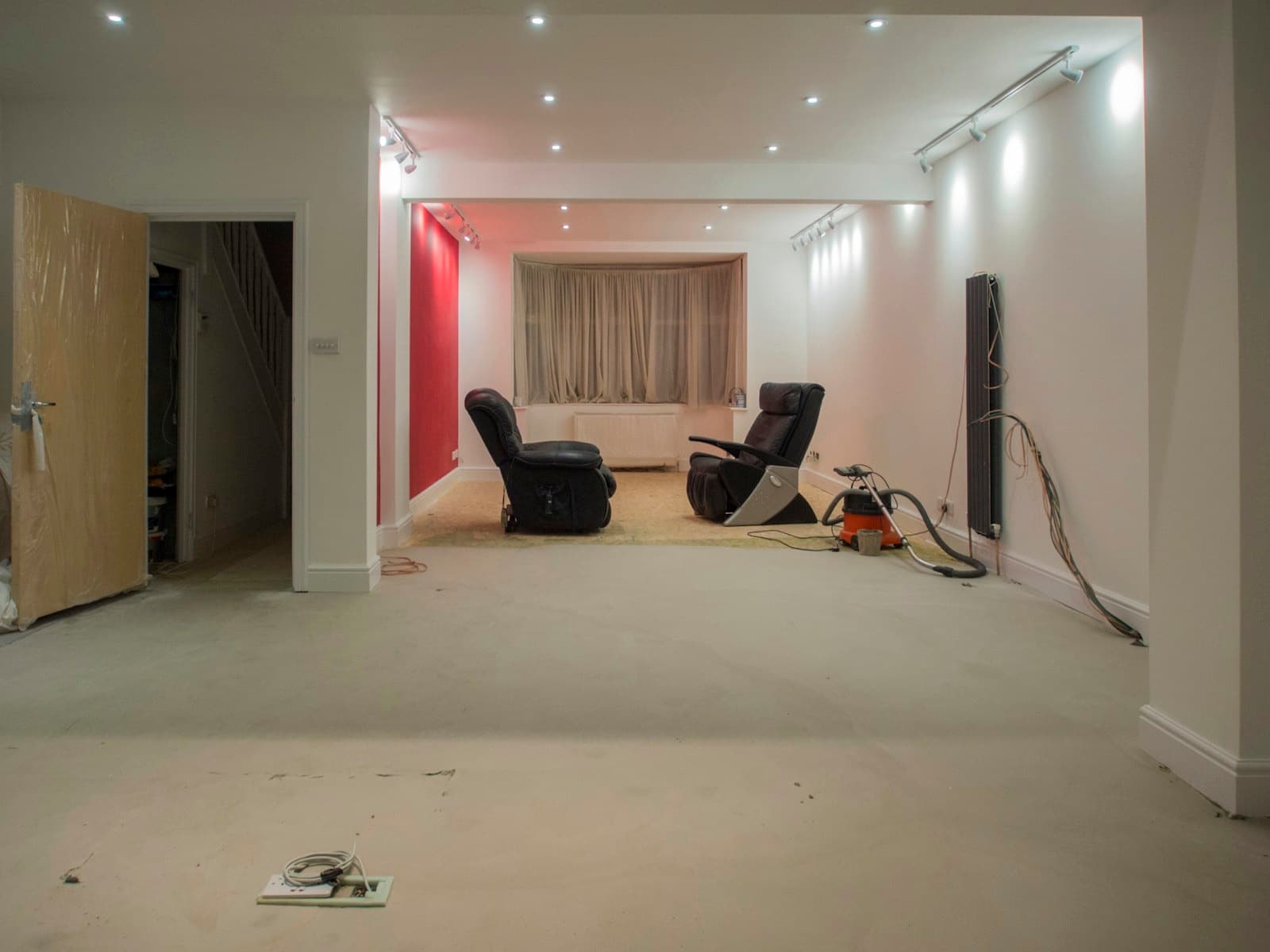

The classic refurb bridge: buy a unit no mortgage lender wants yet, fund the works, then exit onto a commercial mortgage or sell at the improved value.
Bridging suits light and moderate works. Ground-up builds and major structural conversions are development finance, which is released in stages against the build. If your project sits somewhere between the two, we can put it to both types of lender and see who bites.
Open vs closed, first vs second charge
Two distinctions shape how a bridging deal is structured and priced:
Closed bridging
Fixed exit dateThe repayment date is known, say contracts have already exchanged on the sale that repays the loan. Less uncertainty for the lender, so it usually prices sharper.
Open bridging
Exit within the termNo fixed repayment date. The property might be on the market but not yet sold. There is still a maximum term, and the exit still has to be credible.
First charge
Primary securityThe lender holds the first legal charge and stands first in line. Standard on purchases and unencumbered property.
Second charge
Behind an existing loanThe bridge sits behind an existing mortgage, releasing equity without disturbing it. Expect lower LTVs and higher pricing, because the lender is second in the queue if things go wrong.
The exit decides everything
A bridging lender's first question is not “what is the property worth?” It is “how does this loan get repaid?” Get the exit right and the rest follows: which lenders will look at it, what they will charge, how much they will lend and for how long.
- ✓Sale: the loan is repaid from selling the property, or another asset, within the term. A realistic marketing appraisal strengthens the case.
- ✓Refinance: a longer-term product, such as a commercial mortgage, repays the bridge once the property or the business is ready for one. A decision in principle strengthens the case enormously.
Stress test it before you sign
If the refinance took three months longer than planned, or the sale price came in 10% lower, would the numbers still work? If the answer is no, the plan is too tight. Extensions and default rates get expensive quickly, and the loan is secured on the property, so a slipped exit is not a small problem.
LTV, terms and costs
Where bridging typically lands across the UK market. A general guide, not a quote. Every case is subject to status, valuation and the lender's checks.
| Feature | Typical range | Worth knowing |
|---|---|---|
| Gross LTV | Up to ~75% | Commercial property often caps lower than residential investment |
| Net day one | Often 65–70% | Rolled-up or retained interest and fees come out of the advance |
| Term | 1–24 months | Commonly 12–18 months on business deals |
| Pricing | Monthly rate | Driven by LTV, property type and the strength of the exit |
| Speed | ~2–6 weeks | Days is possible on the fastest, simplest cases |
The monthly rate is only part of the picture. The full cost of a bridge is made up of:
- ✓The monthly interest, rolled up, retained or serviced
- ✓The lender arrangement fee, usually a percentage of the loan
- ✓The valuation, sized to the property and its complexity
- ✓Legal costs, and you typically cover the lender’s solicitor as well as your own
- ✓Exit or early repayment fees with some lenders. Always ask, because they change the maths
The only fair way to compare two bridging offers is the total cost in pounds from drawdown to redemption, every fee included. That is how we lay terms out for you, not just the headline monthly rate.
Regulated vs unregulated bridging
The distinction is about the security, not the borrower's intentions. Bridging secured on a home the borrower or their family lives in is a regulated mortgage contract and falls under FCA mortgage rules. Bridging to a limited company or LLP, secured on commercial or investment property, is generally unregulated business lending.
We only work on the second kind. CapExpand Ltd is not authorised or regulated by the Financial Conduct Authority. We introduce bridging for limited companies and LLPs and do not deal in bridging secured on anyone's home. If your case involves your own residence, a regulated mortgage broker is the right place for it.
Who it suits
Bridging tends to be a good fit when the deal looks like one of these:
- ✓A limited company buying at auction or against a hard deadline
- ✓An investor or landlord buying a property that needs work before it will mortgage
- ✓A business securing premises before a sale, refinance or other funds arrive
- ✓A company releasing equity from property it owns for a time-limited opportunity
Lenders weigh the property, the loan-to-value, the exit and the people behind the deal. Expect personal guarantees from directors on most corporate bridging. What bridging does not suit is anyone without a clear, evidenced way out: if there is no realistic exit, the answer is usually a different product, not a bridge.
A note on who we take on
We currently work with UK limited companies and LLPs only, on a non-regulated basis. We are not authorised by the Financial Conduct Authority and do not arrange regulated residential mortgages or bridging secured on your home.
How it works
Tell us about the deal
The property, the price, the loan you need, your exit and, above all, your deadline. Two minutes on the form or a call.
We match you to lenders
We put it to the bridging lenders on our panel suited to that property type, loan size and timescale.
You get terms to compare
We talk you through the monthly rate, the fees, the net day-one advance and the conditions, and flag the catches like exit fees.
Valuation, legals, completion
The lender values the property, the solicitors work in parallel, and the funds complete. On a deadline, we chase every step.
Common questions
How fast can a bridging loan complete?▼
Clean deals typically complete in around two to six weeks, and the fastest cases can be done in days where the valuation is straightforward and the legal work is simple. The biggest thing you control is having your solicitor instructed and your paperwork ready on day one. If you are working to an auction deadline, tell everyone in the chain the completion date at the very first conversation.
How much does a bridging loan cost per month?▼
Bridging is priced as a monthly rate rather than an annual one. What that rate is depends on the loan-to-value, the property type, the strength of your exit and the lender. Budget for an arrangement fee, a valuation, legal costs for both sides and, with some lenders, an exit fee on top. The way to compare offers is the total cost in pounds from drawdown to repayment, and that is how we lay terms out for you.
What can I use as the exit for a bridging loan?▼
The two exits lenders see most are a sale, where the loan is repaid from selling the property or another asset within the term, and a refinance, where a longer-term product such as a commercial mortgage repays the bridge once the property or the business is ready for one. The more evidence you can show, such as a decision in principle for the refinance or a realistic marketing appraisal for the sale, the better the terms tend to be.
What is the difference between open and closed bridging?▼
Closed bridging has a fixed, known repayment date, for example when contracts have already exchanged on a sale. Open bridging has no fixed exit date within the term, for example when the property is on the market but not yet sold. Closed deals carry less uncertainty for the lender, so they usually price better. Either way, the loan still has a maximum term and the exit still needs to be credible.
Do I make monthly payments on a bridging loan?▼
Not necessarily. Interest can be rolled up, where it compounds and is repaid with the loan at the end, or retained, where the lender holds back the expected interest from the advance on day one. Both mean nothing leaves your cash flow during the term. Serviced interest, where you pay monthly, is the third option and keeps the balance from growing.
Can I get a bridging loan with bad credit?▼
Often, yes. Bridging lenders weight the security and the exit far more heavily than a credit score, so adverse credit is not the automatic dealbreaker it can be with other products. Expect it to show up in the rate and possibly the loan-to-value, and be upfront about it from the start so the case goes to the right lenders first time.
Bridging loan vs development finance, which one?▼
The scale of the works decides it. Buying a property and giving it a light or moderate refurbishment before selling or refinancing is bridging territory. Ground-up builds, major conversions and structural projects are development finance, which is released in stages as the work progresses and is assessed against the end value and build costs. If your project sits in the middle, some lenders offer refurbishment bridging that stretches part way. We can put the same deal to both types of lender and let you compare.
How much can I borrow against the property?▼
As a general guide, up to around 75% of the property value gross. Bear in mind that when interest and fees are rolled up or retained, the amount you actually receive on day one is often nearer 65% to 70%. Commercial property tends to be capped lower than residential investment property. Every case is subject to valuation and the lender’s own criteria.
Is bridging finance FCA regulated?▼
It depends on the security. Bridging to a limited company or LLP, secured on commercial or investment property, is generally unregulated business lending. Bridging secured on a home you live in is a regulated mortgage contract and works very differently, and we do not do those. CapExpand introduces limited companies and LLPs on a non-regulated basis only and is not an FCA-authorised firm.
Does CapExpand lend the money?▼
No. We are not a lender. We introduce UK limited companies and LLPs to a panel of bridging lenders and help you compare the terms that come back. The lender pays us a commission if a deal completes, never you.
Sources
- FCA, regulated mortgage contracts (MCOB)
- ASTL, bridging and short-term lending standards
- NACFB, commercial finance standards
- Bank of England, base rate
Important information
CapExpand Ltd is not authorised by the Financial Conduct Authority and can only complete non-regulated introductions. We work with UK limited companies and LLPs only, for business and commercial purposes. We are not a lender and we do not provide financial, tax or legal advice. We do not arrange regulated residential mortgages, consumer buy-to-let mortgages or any other regulated mortgage contracts. We work with a panel of lenders whose particulars are available on request, and we receive commission from the lender if a deal completes, at no cost to you. All lending is subject to status, valuation where applicable and the lender's own checks.
Registered office: Pure Offices, Lake View Drive, Annesley, Nottingham, NG15 0DT. Company No. 14433858.
Working to a deadline?
Tell us the property, the numbers, your exit and the date you need to complete, and we'll come back with the bridging lenders best placed to hit it. Free to use, no obligation.