Can I get a card machine with bad credit?
Often, yes, but it depends on which kind of provider you ask. Contract acquirers such as Dojo run a credit assessment through credit reference agencies as part of opening your merchant account, and a poor history can lead to a decline, a reserve on your takings, or different terms. Pay-as-you-go readers verify who you are but their published sign-up is lighter, which is why they are usually the first port of call. Nobody can promise an approval, including us.

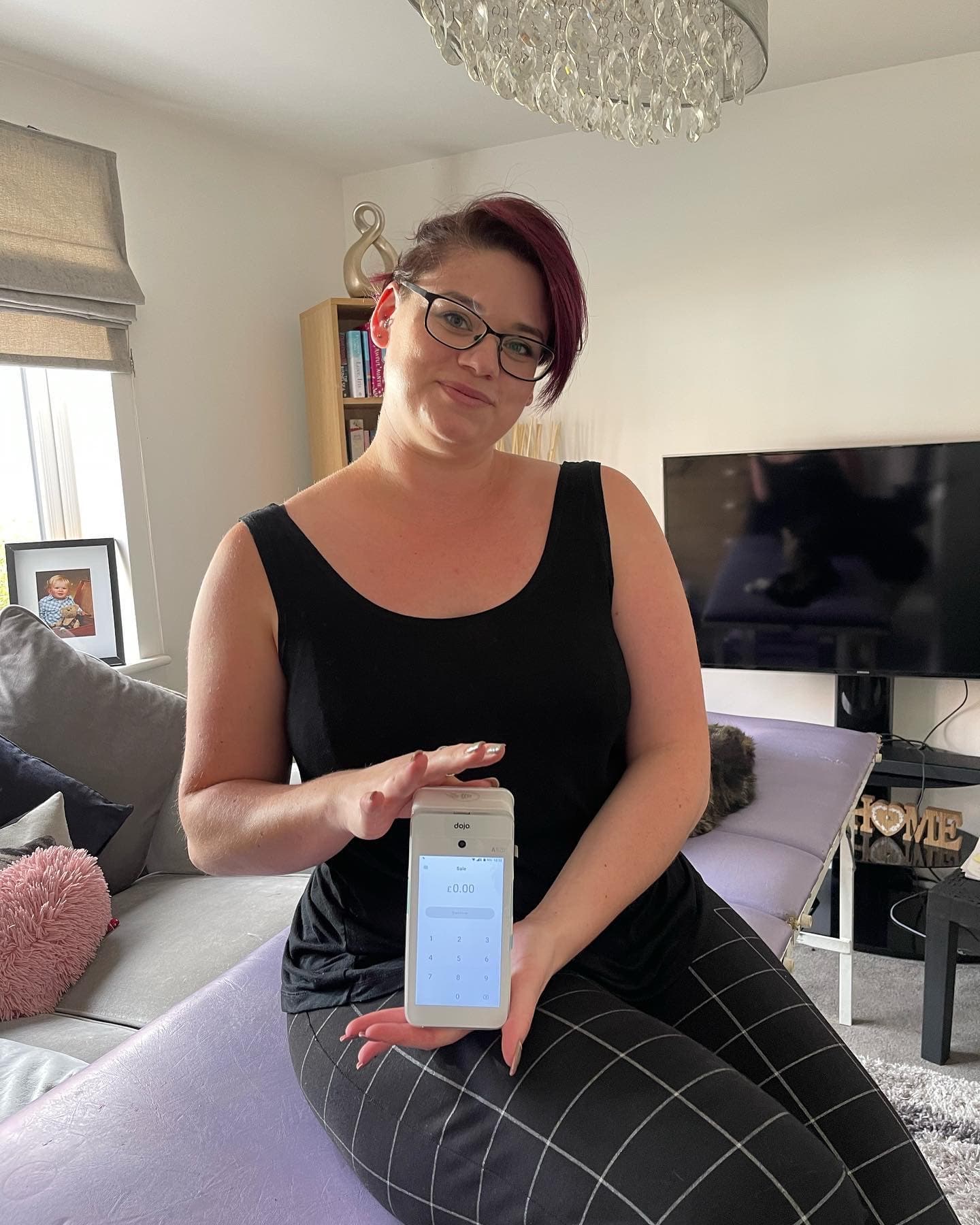
Why a card machine provider cares about your credit
A card machine agreement is not a loan, so the question surprises people. The reason is chargebacks. When a customer disputes a payment and wins, the acquirer has to return the money to the cardholder's bank, then recover it from you. If you have gone out of business, or simply do not pay, the acquirer carries the loss. From its side, every merchant account is a line of exposure, and your credit history is one of the few signals it has about how that exposure might go.
That is why Dojo's terms require “a legitimate business in the UK or a UK resident over 18 who has a legitimate business in the UK”, and state that it carries out KYC checks and a credit assessment via credit reference agencies. It is the acquiring behind the terminal, which is a regulated payment service, that drives the checks. Card-terminal hire itself isn't an FCA-regulated activity; the acquiring behind it is.
Who checks what
| Provider | Who can apply | Checks at sign-up | What you get |
|---|---|---|---|
| Dojo (contract) | UK business, or UK resident over 18 with a legitimate UK business | KYC plus credit assessment via credit reference agencies (T&Cs cond. 3) | Individual decision; individually quoted pricing |
| SumUp (PAYG) | Sole trader, freelancer or UK limited company; UK resident | Proof of ID (passport or driving licence) and proof of address dated within six months; business registration document if applicable (SumUp document verification guide) | 1.69% flat, no monthly fee |
| Square (PAYG) | Individual or sole trader, or company with CRN | Identity verification as a regulated firm | 1.75% flat, no monthly fees |
| Zettle (PAYG) | UK business; see PayPal sign-up | Identity verification through PayPal's sign-up process | 1.75% flat, no recurring fees |
Dojo from its T&Cs v1.6. SumUp, Square and Zettle from their sign-up guidance and pricing pages. All checked August 2026; each provider's current process governs.
Contract acquirers
Expect a full application: business details, the nominated bank account for settlement, proof of identity, and consent to a credit search on the business and, for sole traders and directors, often on the individual. The acquirer then decides whether to open the account, on what pricing, and with what conditions. Dojo pricing is quoted individually for each business in any case, so the outcome of the assessment and the quote arrive together. Our Dojo provider page sets out the rest of the process.
Pay-as-you-go readers
SumUp, Square and Zettle hold the merchant account themselves and sign you up as a sub-merchant. Their published onboarding is an identity check in the app: a passport or driving licence, sometimes proof of address, and the bank account you want paying into. We have not seen any of them publish a credit-score threshold. That does not mean they never decline or restrict an account, and each reserves the right to, but the bar at the door is lower. We compare them on our Square vs SumUp and Dojo vs SumUp pages.
What a provider might do instead of declining
A poor credit file does not always mean no. Providers have other tools, and it helps to know what they are called when one appears in your terms.
Rolling reserve: a percentage of each settlement held back for a set period before release, as a buffer against chargebacks. The percentage and period vary by provider
Delayed settlement: paying you on a longer cycle than the standard next-day or next-business-day terms
Lower processing limits: a cap on monthly card turnover or on single-transaction size until a trading history builds
Different pricing or term: a higher rate, a shorter or longer minimum term, or a purchase rather than a rental of the terminal
Read any of these carefully before accepting. A reserve on a business that is already short of cash can cause the problem it is meant to protect against.
Things that help an application
None of this guarantees anything, but in our experience the following make a contract application easier to assess.
A business bank account in the trading name, with a few months of statements showing regular takings
Satisfied rather than unsatisfied county court judgments, with the paperwork to show it
A clear, specific description of what you sell and your expected average sale and monthly volume
Evidence of previous card processing history, such as statements from a former provider
Disclose the history up front: acquirers find it anyway, and an undisclosed problem reads worse than a disclosed one
When a contract application is not the right move
If you have a recent bankruptcy, an unsatisfied CCJ or a merchant account closed for chargebacks in the last year or two, a contract application is likely to be hard work and may leave a search on your file for little gain. A pay-as-you-go reader gets you trading now at a published rate with no minimum term. Build six to twelve months of clean card history on it, then apply for a contract with statements in hand. At that point, for higher card volumes, a quote is often the lower option, and the only way to know is to compare a quote against your current statement.
If the credit problem is a symptom of a wider cash-flow issue rather than the issue itself, that is a different conversation. We can introduce limited companies and LLPs to funding providers; the information on our business loan declined page is a starting point, and we do not give financial advice.
Not sure whether to apply?
Tell us your situation. If a pay-as-you-go reader is the sensible first step we will say so; if a Dojo application makes sense we will introduce you. No promises on the outcome, from us or anyone.
Talk to usCapExpand is an authorised Dojo partner and is paid by Dojo when a business signs up through us. That does not change the price you pay.
Frequently asked questions
Do card machine providers run a credit check?
Contract acquirers generally do. Dojo's terms state that it carries out know-your-customer checks and a credit assessment using credit reference agencies before opening an account. Pay-as-you-go providers verify your identity, because they are regulated firms, but their published sign-up process is lighter and done inside the app.
Can a sole trader with bad credit get a card machine?
Sole traders can apply to Dojo, SumUp and Square according to their published sign-up pages. Dojo's terms cover a UK resident over 18 with a legitimate business in the UK. Whether an application with adverse credit is accepted is the provider's decision and nobody can promise an outcome. A pay-as-you-go reader is the route most people with credit problems try first.
Will applying for a card machine affect my credit file?
That depends on whether the provider runs a hard or soft search, which varies by provider and is not always stated publicly. Ask before you apply. A credit assessment via credit reference agencies, as in Dojo's terms, will at minimum involve a search of your file.
What is a rolling reserve?
A set-up where the acquirer holds back a percentage of your card takings for a period before releasing it, as a buffer against chargebacks and refunds. Providers sometimes apply one to higher-risk accounts instead of declining them. The percentage and holding period are set by the provider and vary; read the terms before accepting.
Is a card machine a form of credit?
No. A card machine agreement is a service contract for payment acceptance, not a loan. Card-terminal hire itself is not an FCA-regulated activity; the acquiring behind it is, which is why acquirers such as Paymentsense (Dojo) are FCA-authorised. That does not stop an acquirer assessing your credit history as part of deciding whether to take on your business.
Acceptance decisions belong to each provider. Nothing on this page is a promise of approval or financial advice. Sources were checked in August 2026.
Sources (checked August 2026)
- Dojo terms and conditions v1.6, condition 3: eligibility, KYC and credit assessment
- FCA Handbook, PERG 15.3: acquiring as a regulated payment service
- Square: get started guide, sign-up and identity verification
- SumUp: 1.69% PAYG, no monthly fee
- SumUp: document verification guide, proof of ID and proof of address
- Zettle UK pricing: 1.75%, no recurring fees
- Business Expert Dojo review: sole traders, partnerships and limited companies qualify (review site)
CapExpand Ltd (Company No. 14433858) is an authorised Dojo partner, not a card machine manufacturer. We are not currently authorised or regulated by the Financial Conduct Authority. Card machine pricing and availability are subject to change. All information on this page is for general guidance only.