Range Rover and Land Rover business finance, explained

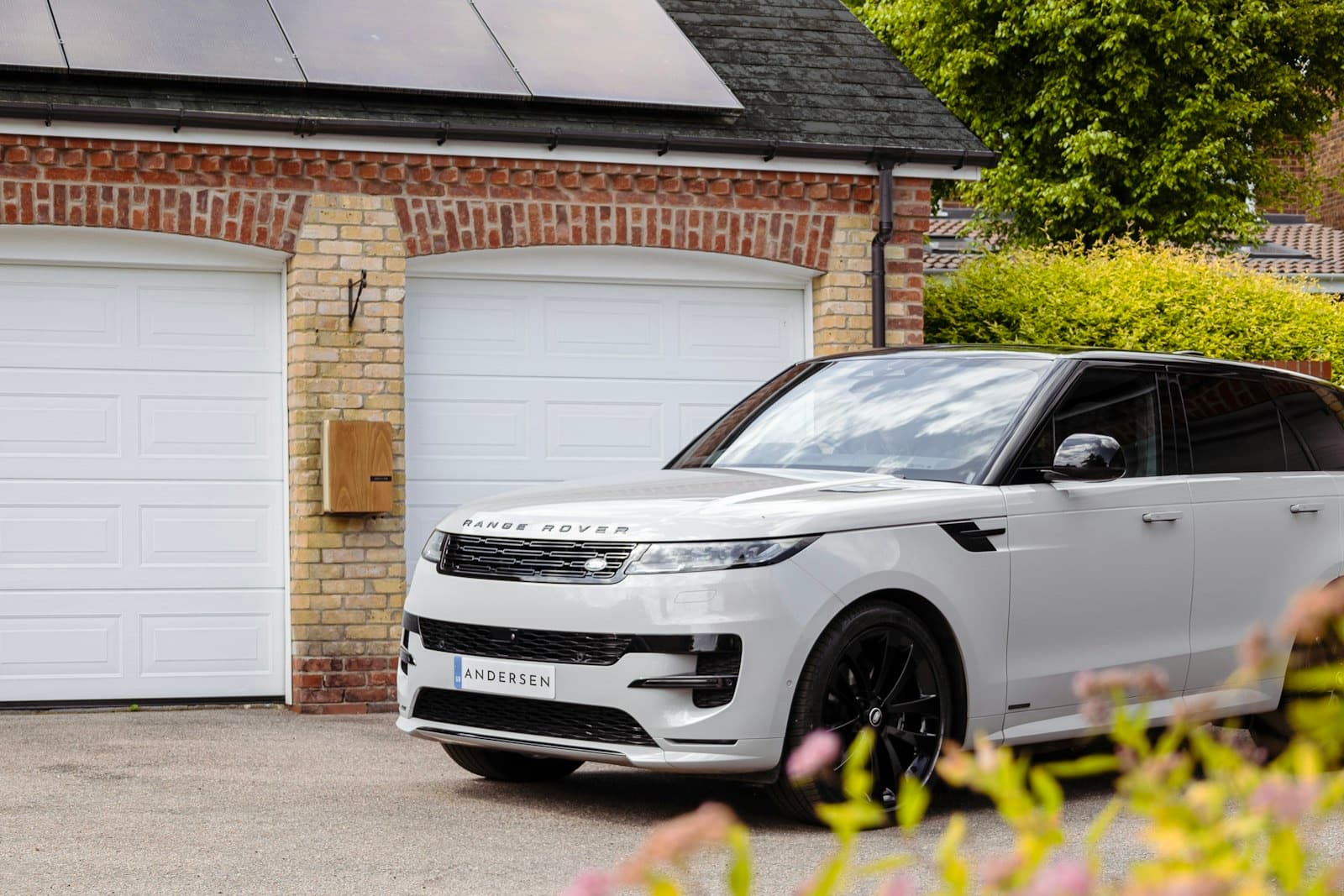
A Range Rover sitting on the driveway is a proper milestone. When it goes through the company, though, the question stops being "which colour" and becomes "which structure". Get that bit right and the car costs the business less, the cash stays where you need it, and the paperwork is clean if HMRC ever asks. Get it wrong and you can overpay for years.
This is a plain guide to how a UK limited company funds a Land Rover, whether it is a Defender, a Range Rover, a Sport or a Discovery. We arrange finance for UK limited companies, LLPs, sole traders and partnerships through business vehicle finance lenders, so that is the lens here. If you are buying in your own name for personal use, that is regulated consumer car finance and you want an FCA-authorised motor broker, not us.
The honest bit first
Most of the "Land Rover finance" you see advertised is PCP, which is built for private buyers and is a regulated consumer product. Through a company the routes are slightly different. The four you will actually be offered are hire purchase, finance lease, business contract hire and lease purchase. PCP does exist for businesses with some lenders, but its natural business cousin is contract hire, so that is what we cover.
We are a commercial finance broker, not a lender and not your accountant. We will explain how each option works and put your case to the right lenders on our panel. We do not tell you which one to pick, and the tax treatment is something to confirm with your accountant before you sign. More on the tax further down, kept deliberately light.
The four ways a business funds a Land Rover
Hire purchase (HP)
You put down a deposit, pay fixed monthly instalments, and the car belongs to the company at the end after a small option-to-purchase fee. You can add a balloon (a larger final payment) to pull the monthlies down, or run it with no balloon so there is nothing left to settle. This is the route most owner-managers take when they intend to keep the car. It is also the one behind the real deal further down.
Finance lease
The funder owns the car and the business rents it over an agreed term. Payments can be lower than HP and it protects working capital, which suits higher-value vehicles. At the end you usually sell the car to a third party as the funder's agent, with most of the sale proceeds rebated to you, or run it on for a peppercorn rent. You do not automatically own it.
Business contract hire (BCH)
A straight lease. Fixed monthly payments for two to four years, agreed annual mileage, then you hand the car back and walk away. No resale risk, no big final payment, predictable cost. The trade-offs are mileage limits, charges for damage beyond fair wear and tear, and the fact that you never own the car. If you like changing every few years, this is the business equivalent of PCP.
Lease purchase
A halfway house. Like HP, you are heading towards ownership, but a mandatory balloon sits at the end, which keeps the monthly payments lower. Unlike contract hire, there is no option to simply hand it back. It tends to suit a higher-value Range Rover where you want ownership but would rather keep the monthlies down. The thing to plan for is that final balloon, whether you clear it with cash, refinance or a part-exchange.
| Option | Own it at the end? | Final balloon? | Tends to suit |
|---|---|---|---|
| Hire purchase | Yes | Optional | Keepers who want to own it |
| Finance lease | Not automatically | No (balloon-style residual) | Protecting cash on a high-value car |
| Business contract hire | No, you hand it back | No | Changing every 2 to 4 years |
| Lease purchase | Yes, after the balloon | Yes, mandatory | Ownership with lower monthlies |
A real deal from one of our introductions
Numbers make this real, so here is one of ours from June 2026. A limited company client was buying a Range Rover Autobiography and wanted it owned outright at the end, no balloon hanging over it. A lender on our panel completed a fixed-rate hire purchase from our introduction. The client is anonymised, but the figures are the actual terms of the agreement.
£100k
Advance
24 mths
Term
£4,845
Per month
£0
Balloon
Twenty-four monthly payments of £4,845.22, no balloon, so £116,285.28 paid back over the two years and the company owns the car outright at the end. A director personal guarantee was a condition, which is standard on a deal this size. The lender said yes and the acceptance held for three months. You can read more on our asset finance page.
What it costs, and how to read a quote
Vehicle finance is usually quoted as a flat rate. The catch is that a flat rate looks cheaper than it is, because you pay it on the full amount even as the balance drops. Rough check: the real APR is close to double the flat rate. So always ask for the APR and the total payable, not just a shiny monthly figure. Deposits on cars like these typically run from 10% upwards, terms from two to five years.
Want to play with the numbers before you talk to anyone? Our asset finance calculator gives an illustrative monthly cost on a flat-rate hire purchase. It is an illustration, not a quote.
What affects whether you get a yes, and the rate
Trading history and accounts. A couple of years of filed accounts makes life easier. Newer companies are not an automatic no, because the car itself is the security, but expect a bigger deposit.
Director profile. Lenders look at director credit and usually want a personal guarantee on a car of this value. That makes you personally liable if the company cannot pay.
Deposit. More money down means less to borrow, lower monthlies and often a better rate.
The car itself. Age, mileage and resale value matter, because the vehicle is the lender's security. A nearly-new Range Rover is easy to fund. A high-mileage import or a heavily modified one means more questions and likely a larger deposit.
The tax bit, kept short
This is where a Range Rover gets interesting, and where you must talk to your accountant rather than us. A few things worth knowing so you ask the right questions:
Cars versus commercial vehicles are treated differently. A standard Range Rover is a car for tax. A Defender Hard Top or a genuine commercial-classified model can be treated as a van, which changes the benefit-in-kind and VAT picture significantly. The classification, not the badge, is what counts.
VAT. VAT on a car bought outright or on HP is usually not reclaimable unless it is exclusively for business use, which is a high bar. On contract hire you can often reclaim 50% of the VAT on the finance element. Commercial vehicles follow different rules again.
Benefit in kind. If the car is available for private use, the director pays a benefit-in-kind charge. For most large petrol or diesel SUVs that charge is high. Electric and low-emission models are taxed far more gently, a 4% benefit-in-kind charge in 2026/27 against up to 37% at the top end, which is why you see so many electric company cars.
None of that is advice, and the rules change. Your accountant will tell you what actually applies to your company and the exact model you are buying.
Two more figures are worth carrying into that conversation. A new zero-emission car qualifies for a 100% first-year allowance until 31 March 2027, so the whole cost can come off taxable profit in year one. Everything else falls into writing-down allowances at 14% or 6% a year depending on emissions, which on a £100,000 car is the difference between a large deduction now and a small one for a very long time. The 14% main rate replaced 18% on 1 April 2026 for companies, according to gov.uk's capital allowance rates page, read 9 September 2026.
Reading that £100,000 agreement back
Work the completed deal above backwards and the cost of the finance was £16,285.28 on a £100,000 advance over 24 months. Inside each £4,845.22 payment, roughly £4,167 repaid the car and roughly £678 was finance cost. On a flat basis that is about 8.1% a year, and the APR would be higher again, because the balance falls every month while the flat charge does not. One real agreement, arranged in 2026, not a rate card.
Appetite at that price point is thinner than people expect. 31 of the 38 asset finance lenders on our panel write standard cars, 28 write electric ones, and only 17 write luxury cars at all. 10 will fund a private-sale purchase rather than a dealer supply, which matters if you have found the car through a specialist. Counts checked September 2026, and the panel shifts as lenders reprice.
Why bother going through us
The dealer's finance desk is one option, and sometimes it is sharp. But a dealer is generally tied to one or two funders. We put your case across a panel of business lenders, which means more chances of a yes and a clearer view of where the keenest terms sit. You see the options, you choose. We do not push a product on you.
It also keeps things simple if you are funding more than the car. Plenty of clients sort the Range Rover and the work van and a piece of kit in one conversation.
Common questions
Can a limited company buy a Range Rover on finance?
Yes. Hire purchase, finance lease, business contract hire and lease purchase are all available to limited companies and LLPs, subject to the lender being comfortable with your trading and the car. An introduction we made completed exactly this kind of deal in June 2026.
New or used, does it matter?
Both can be funded. With older or higher-mileage cars the lender looks harder at resale value, because that value is their security, so expect a larger deposit on anything unusual or imported.
What about a Defender Hard Top or commercial model?
Commercial-classified Land Rovers can be treated as vans for tax, which changes VAT and benefit-in-kind. The funding works the same way, but the tax outcome can be very different. Confirm the classification with your accountant before you commit.
Will I need a personal guarantee?
On a car of this value, almost always yes. A director personal guarantee makes you personally liable for the balance if the company cannot pay. It is standard, not a red flag.
Can I settle a hire purchase early?
Usually, yes, and on HP an early settlement reduces the interest you pay because interest is charged over time. The lender will give you a settlement figure. Lease and contract hire work differently, so ask before you sign if early exit matters to you.
Do you arrange personal Range Rover finance?
No. {clientScopeSentence()} That applies to business vehicle finance too. If you are buying personally, that is regulated consumer credit and you want an FCA-authorised motor finance broker.
Sources and references
- Gov.uk: expenses and benefits, company cars
- Gov.uk: capital allowance rates and pools, main rate 14% from April 2026 (read 9 September 2026)
- HMRC: tax for businesses
- Gov.uk: business finance and support
- British Business Bank: business guidance
- Financial Conduct Authority
- UK Finance: business finance data
- Companies House: CapExpand Ltd 14433858
Thinking about putting one through the company?
Tell us the car and the structure you are leaning towards. We will put it to the right lenders and come back with real options, not a sales pitch.
Get a business finance quoteCapExpand Ltd (FRN 1060885) is an Appointed Representative of White Rose Finance Group Limited, which is authorised and regulated by the Financial Conduct Authority (FRN 630772). We are a credit broker, not a lender. We do not provide financial advice.